Independent project / Case study
4 min read
Diald.
Pre-launch / MVP testing
Designing and building a fitness coaching marketplace that makes it easier to discover trusted coaches, evaluate real client experiences and find the right fit.
- Role
- Founder & Product Designer
- Focus
- 0→1 Product Design / Design Engineering
- Status
- Pre-launch / MVP testing
- Timeline
- Ongoing
- Product
- Fitness coaching marketplace


01 / The opportunity
Finding a coach shouldn't be a guessing game.
The fitness coaching market is full of talented independent coaches, but finding someone suitable often means searching social media, comparing incomplete profiles and relying on testimonials selected by the coaches themselves.
For potential clients, this makes it difficult to understand who to trust. For independent coaches, standing out and communicating the value of their service can be just as challenging.
The opportunity wasn't simply to build another directory. It was to make choosing a fitness coach more transparent, trustworthy and straightforward.
Word of mouth
Recommendations from existing clients and personal networks. Built on trust, but difficult to scale.
Instagram
Coaches build an audience through content and DMs, but experience and credibility can be difficult to verify.
Local gyms
Clients discover trainers through their gym, limiting choice to those within their immediate surroundings.
Personal websites
Individual websites showcase coaching services, but information, pricing and reviews vary between coaches.
Different channels. No single place to compare.
Finding the right coach means navigating disconnected platforms, inconsistent information and varying levels of trust.
02 / Discovery
Two sides. Two different problems.
I explored the needs of both independent coaches and people looking for one. Conversations with each group made it clear that the product had to hold two jobs at once: help clients judge trust and fit, and give coaches a credible place to show their work.
That dual brief shaped everything that followed. A one-sided marketplace — great for browsing, useless for coaches, or the reverse — would not be worth building.
01
Clients can't tell who to trust
Public profiles are easy to find and hard to evaluate. Testimonials are usually chosen by the coach, so they rarely help someone decide whether the working style, experience or programme will actually suit them.02
Coaches struggle to look credible without looking salesy
Independent coaches are competing with polished brand accounts. They need a place to show the quality of their work that isn't another Instagram grid, without spending their time building a custom website.03
A marketplace only works if both sides benefit
If clients can't assess fit, they bounce. If coaches don't get enquiries that match the way they work, they leave. The product has to be useful to both groups from the first release, not after a hypothetical network effect.
Independent coaches
Visibility
Reaching new clients often relies on personal networks, social media and existing relationships.
Credibility
Demonstrating experience, qualifications and results is difficult across disconnected channels.
Conversion
Turning initial interest into meaningful enquiries requires managing conversations across different platforms.
Potential clients
Discovery
Finding a coach suited to individual goals, preferences and location can require searching multiple platforms.
Trust
It isn't always easy to evaluate a coach's experience, credibility or previous client feedback.
Comparison
Different profiles present different information, making it difficult to confidently compare available options.
The shared disconnect.
Coaches need better ways to demonstrate their value and reach the right people. Clients need a clearer, more trustworthy way to discover and compare coaches.
The opportunity
Bring discovery, credibility and communication into one experience.
03 / The strategy
A marketplace small enough to be useful.
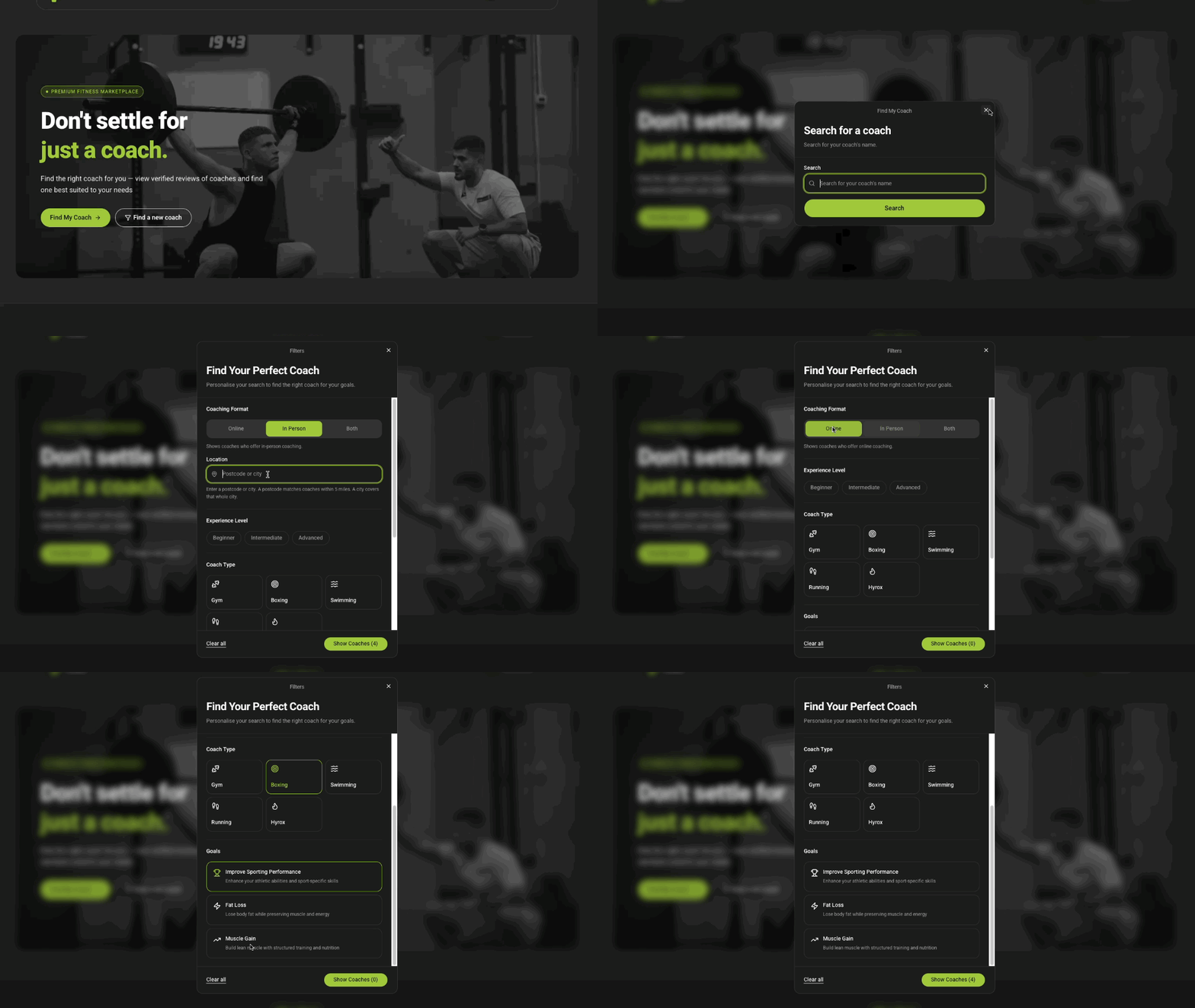
The temptation with a 0→1 marketplace is to design the finished vision: booking, payments, programmes, messaging, the lot. I narrowed the first release to the journeys that actually unlock trust — discovering a coach, evaluating them, and making contact with a clearer sense of fit.
Payments, scheduling and deeper programme tools can wait until there is a reason to add them. Stripe onboarding, in particular, is a later consideration rather than a launch requirement.
- 1
01
Discover
Find coaches by fit, not follower count.
- 2
02
Evaluate
Read attributed reviews from real clients.
- 3
03
Connect
Reach out with a clearer sense of who you're choosing.
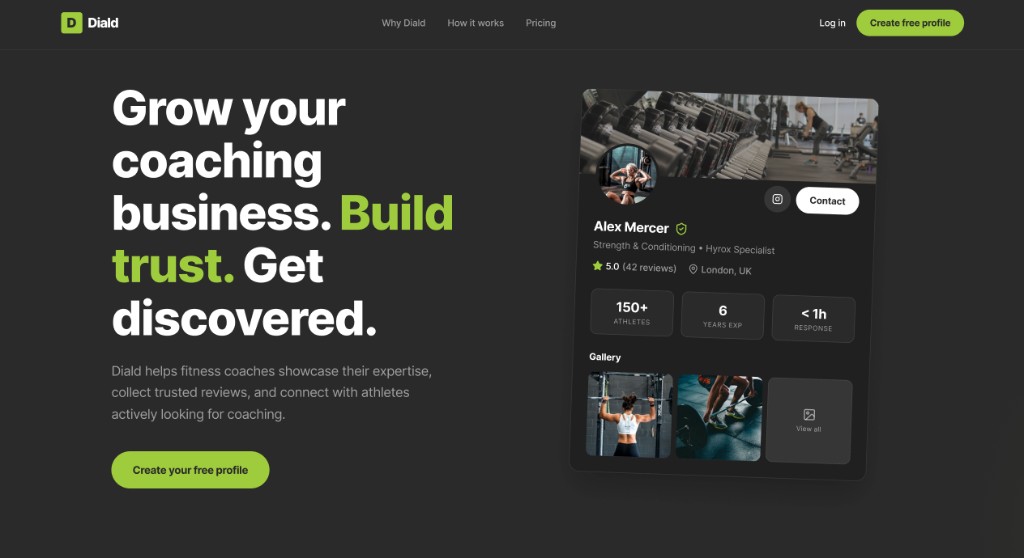
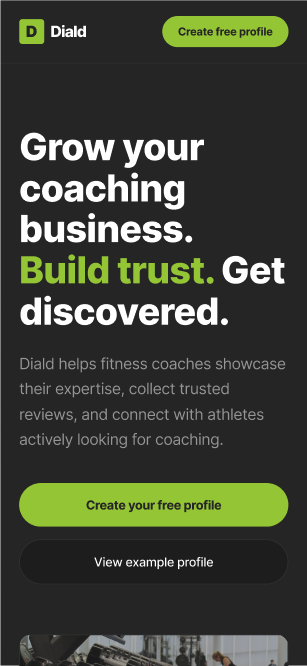
Early concepts of how to communicate the concept on the landing section.
04 / The approach
Designing and building at the same time.
I am designing and building Diald myself, using design engineering and AI-assisted development to move from research into a working product without a separate engineering team. That changes the trade-offs: every extra surface has to be something I can ship and maintain, not just something that looks complete in a file.
The aim for this phase is a coherent MVP that can be tested with real coaches and clients, then tightened. It is not a finished marketplace, and it is not treated as one.
01
Trust before scale.
02
Fit over follower count.
03
Ship a useful core, not a complete platform.
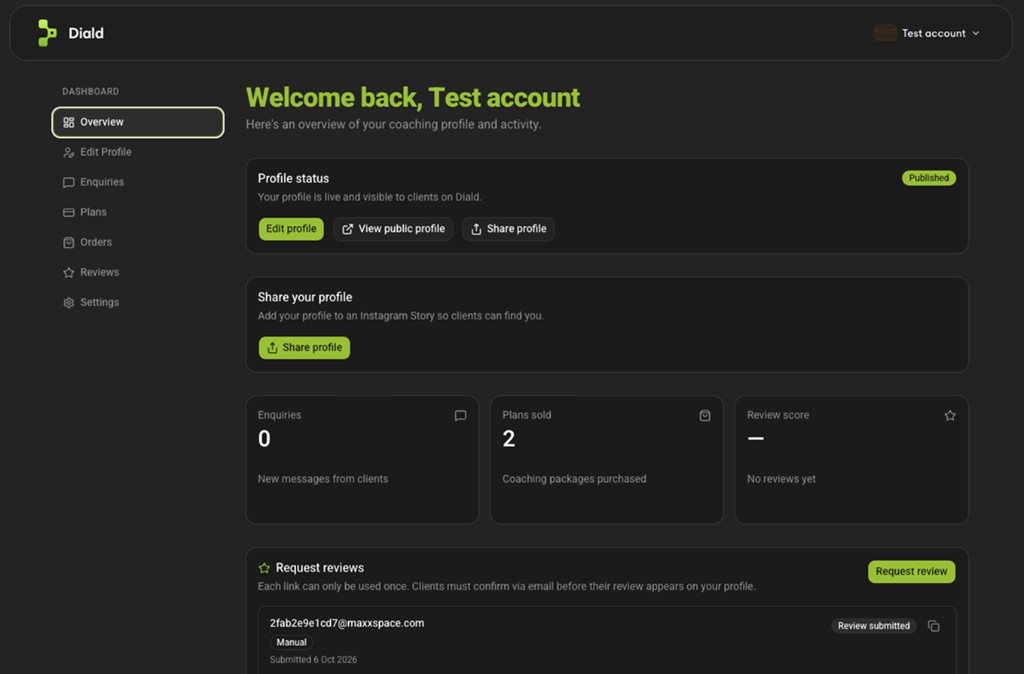
05 / The experience
Trust has to live in the interface.
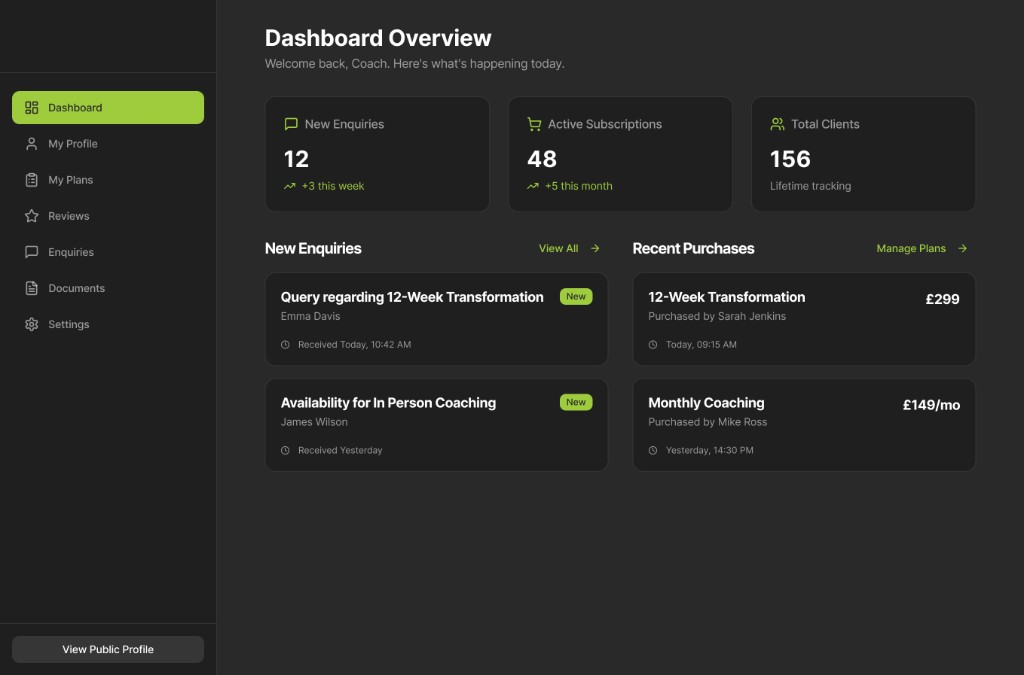
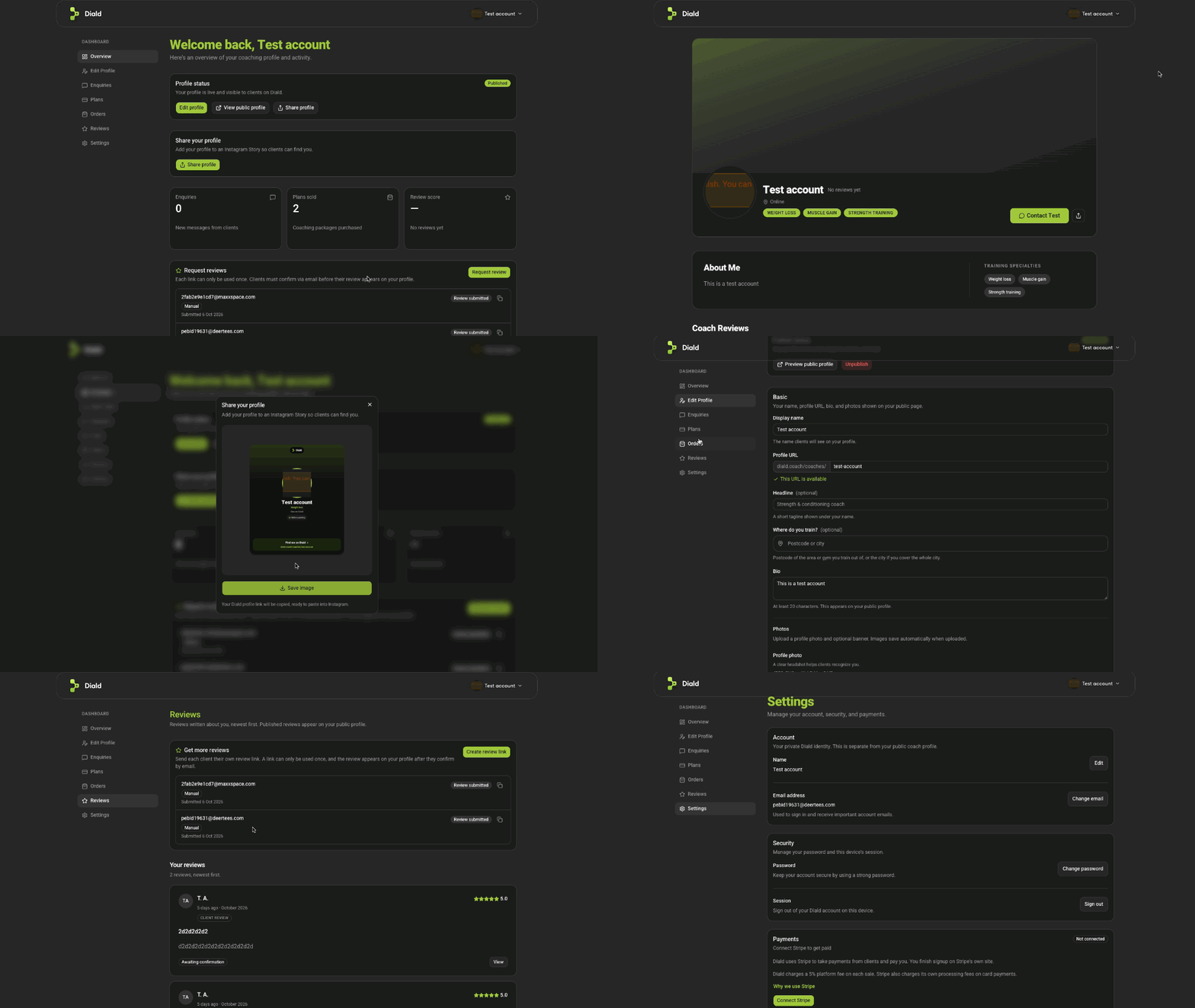
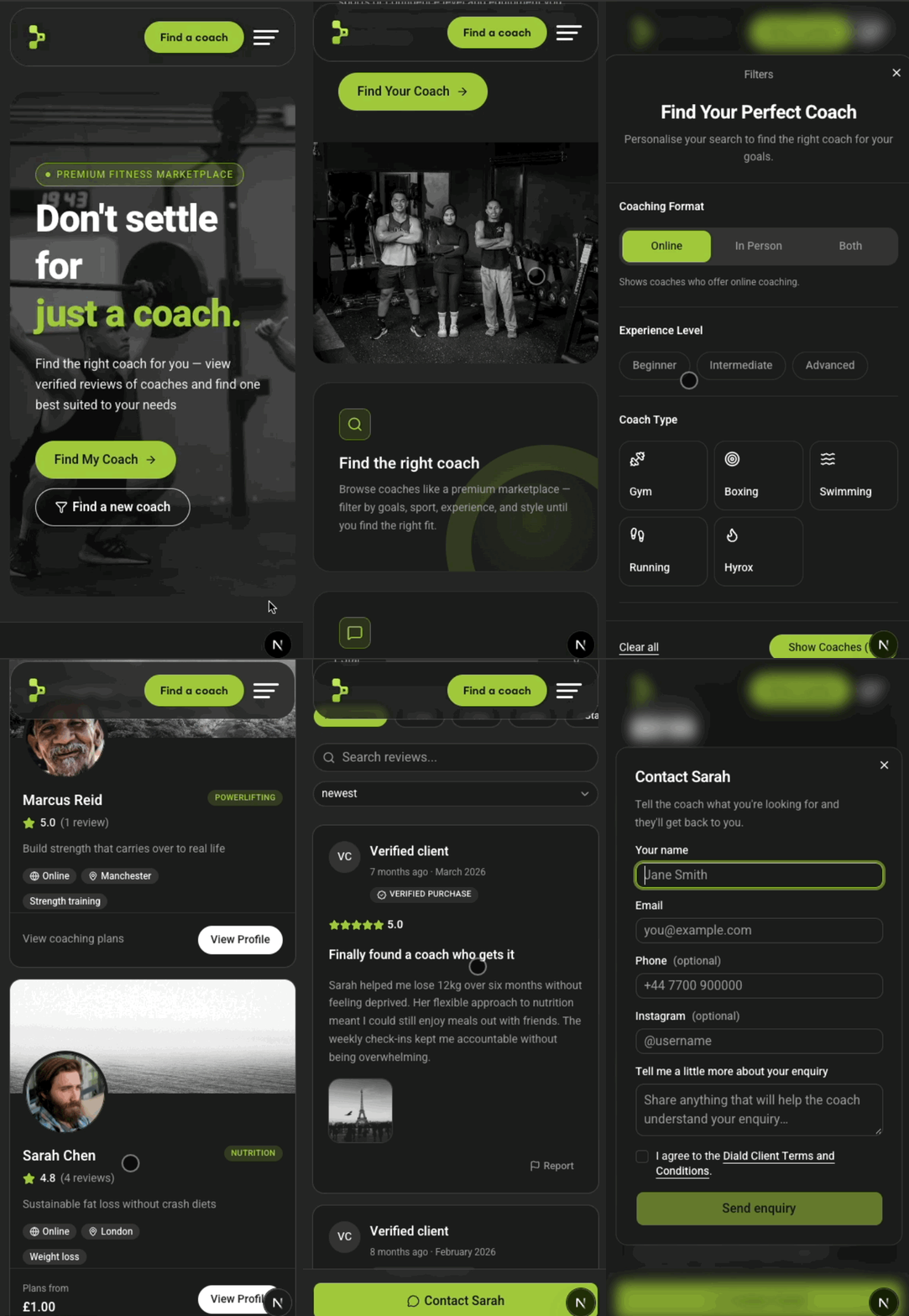
The product decisions that matter most are the ones clients and coaches will actually use to judge one another. Profiles, reviews and sharing had to carry that load without turning into a social network.
01
Profiles built around real client experience
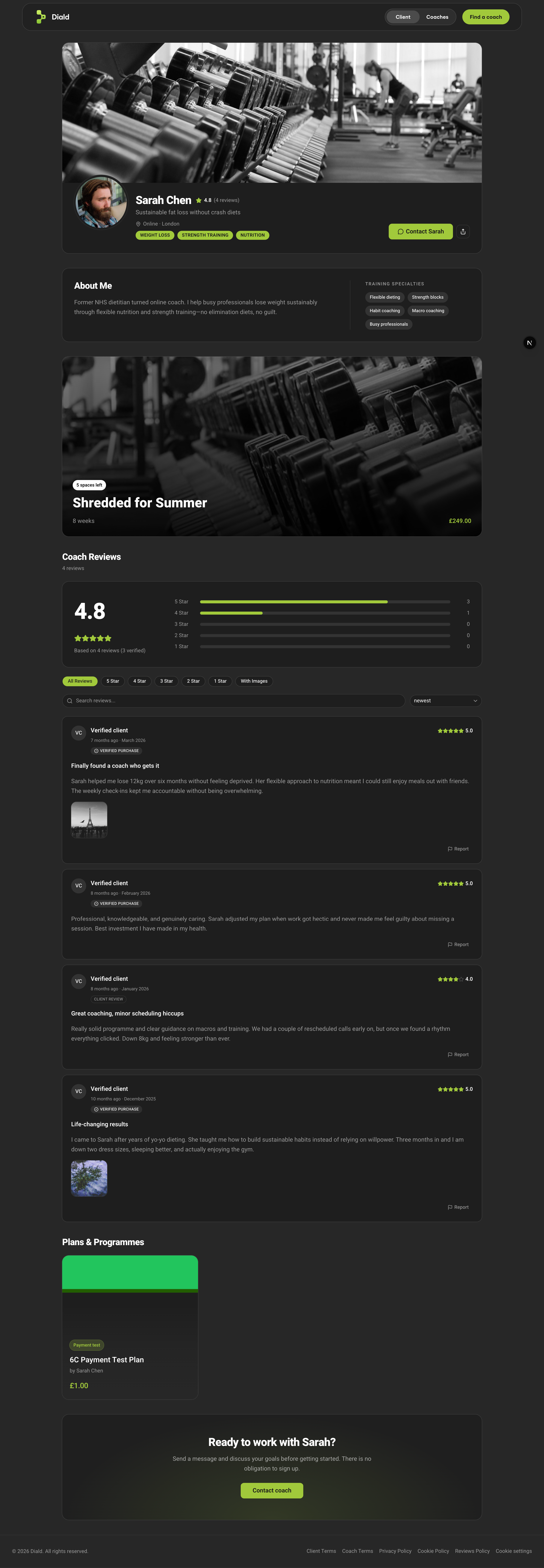
Coach pages needed to show more than photos and a biography. The profile is organised around how someone works, who they typically help, and what previous clients have said — so a visitor can judge fit without a sales call.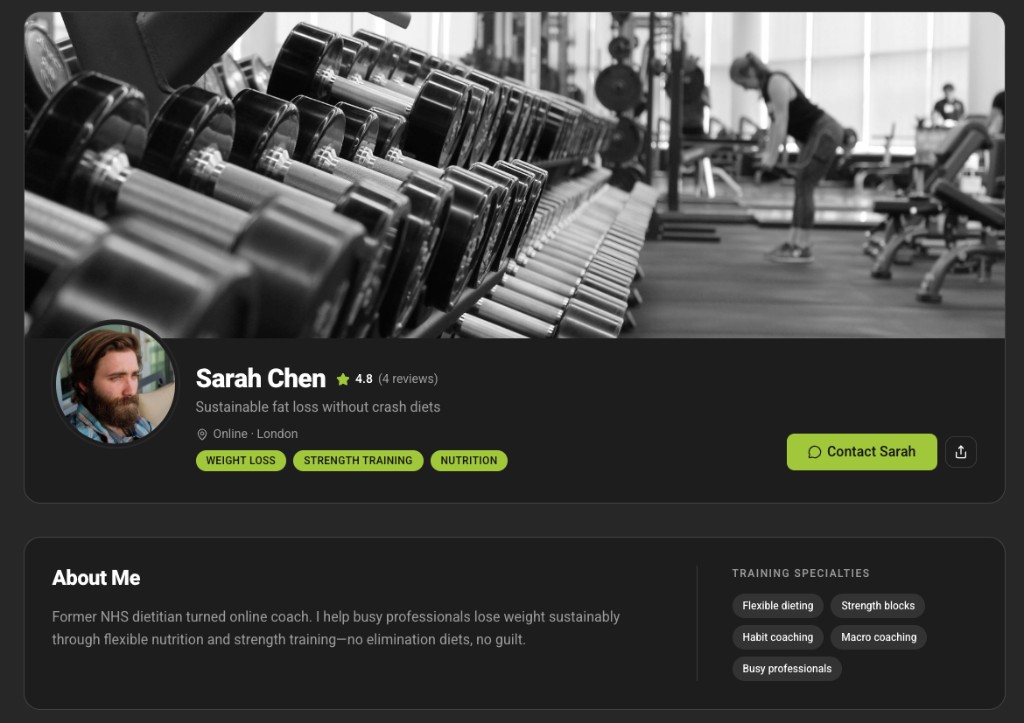
02
Reviews that aren't a highlight reel
Self-selected testimonials were the original problem. Diald treats reviews as a structured part of the product: attributed, collected through the platform, and visible in context rather than quoted in isolation.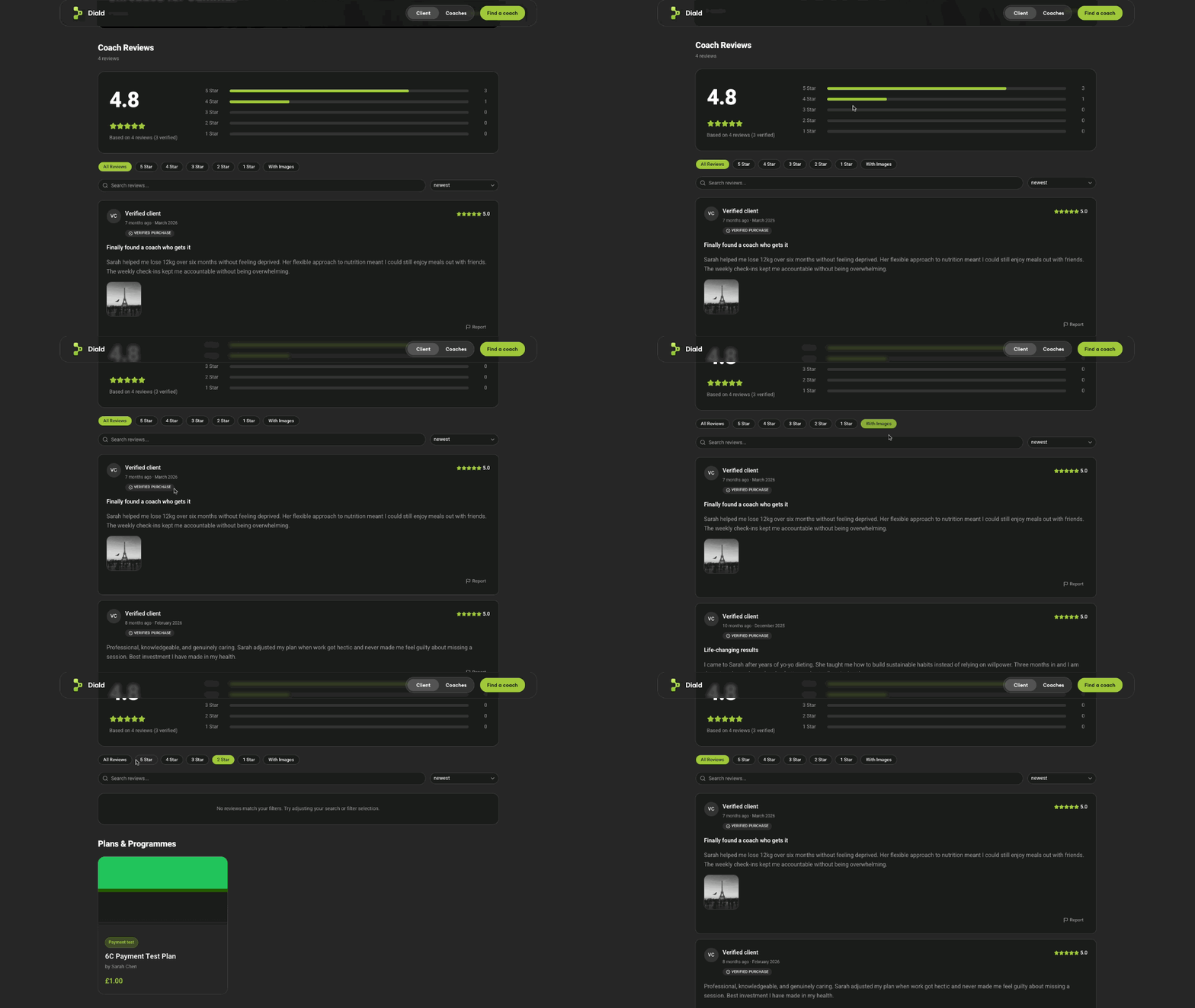
03
A path from Instagram to a proper profile
Most coaches already have an audience somewhere else. Sharing a profile or a review needed to feel native to that reality, so the product could grow from existing relationships instead of asking people to start from zero.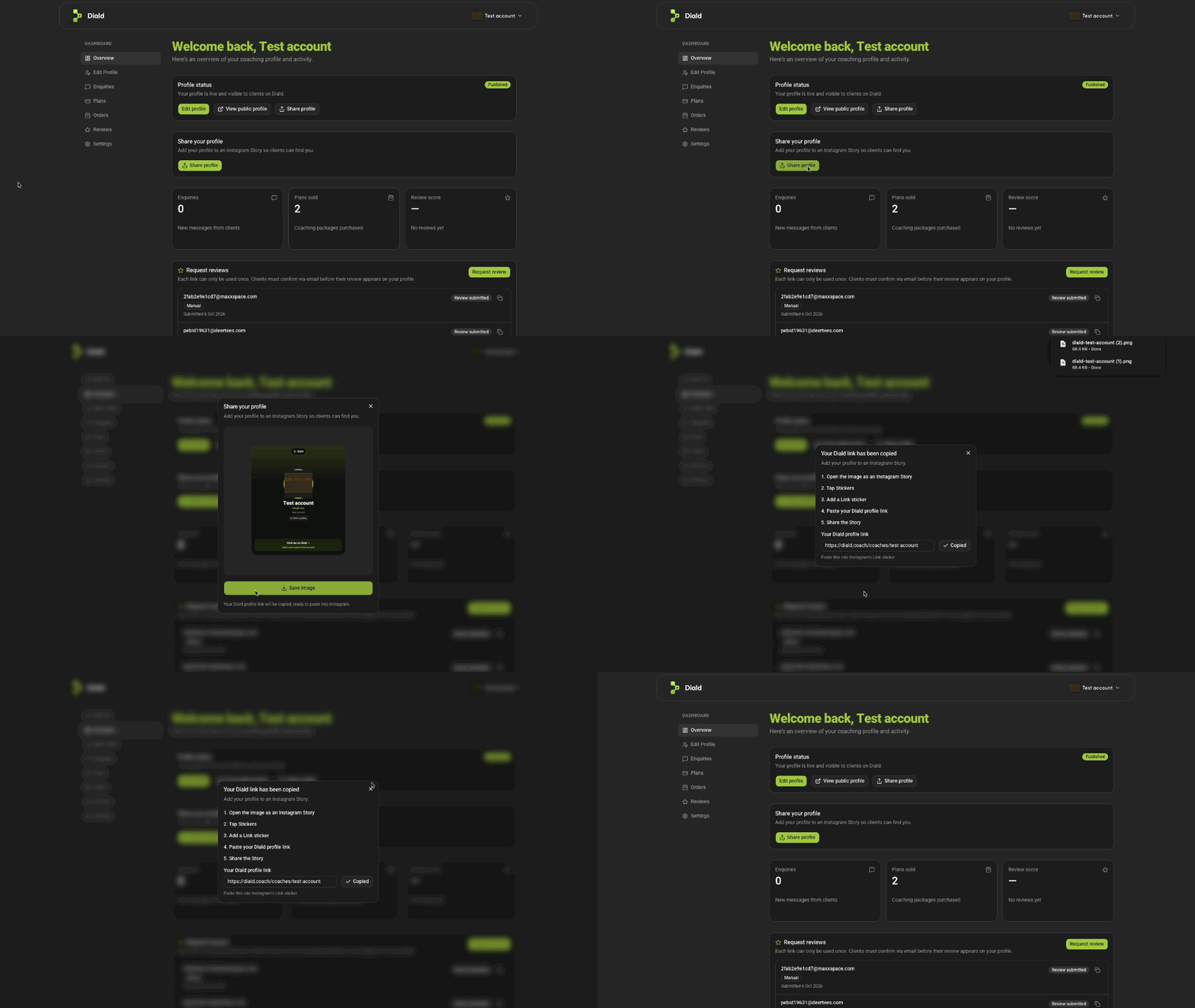
06 / Where it stands
A working product. Not a launched marketplace.
Diald is in pre-launch MVP testing. There are no acquisition, conversion or revenue results to report, and I am not treating early internal use as proof of product–market fit.
The next milestone is a launch with a focused set of published coaches — a target of 50 to 100, not a number already reached — alongside the trust and fraud-prevention work a public marketplace will need.
Pre-launch
Current status: MVP testing
50–100
Published coaches as a launch target, not a current result
Two sides
Clients and coaches, designed together
07 / Looking back
Building enough to learn, not enough to get stuck.
The hardest part has been wearing founder, designer and builder at once. It is easy to keep adding surfaces because they are interesting to design. It is harder to leave them out so the core can actually be tested.
Doing the implementation myself has been useful. It makes the cost of a clever idea immediate, and it has kept the MVP honest: if I cannot ship and maintain it, it does not belong in the first release.